Saturday, August 26, 2006

Time Capsule

August 12, 2006

Many people visit Europe in order to get in touch with history. This has always been a primary interest for me as well, but in all the many months I have spent here, I can honestly say that I never had such an intimate and visceral response to the past as I did today.

Deborah and I were driving home from Italian Switzerland, where we had spent a week’s vacation with her family. Our return route went by way of the San Bernardino Pass, one of the most important byways in Europe since ancient times, and we spent several hours exploring the towns and fortifications that had accumulated over the ages to exploit the strategic position of the valley. Moving on past ruin-dotted Chur, the oldest city in Switzerland, and through the sleepy wooden hamlets of Heidi’s own canton, we finally made it back to Deborah’s house. We were furiously hungry.

In the eating frenzy that followed, I blithely consumed the remainder of a jar of reddish sauce I found in a corner of the fridge. As I was putting the very last dab on a slice of zucchini, Deborah glanced at the jar and observed cheerily that the listed best-before date had come and gone some six years ago. Indeed, by some grand cosmic joke, the six-year anniversary of the expiration was this very week.

This gave me pause in a way that no mouldering Roman tower or precious cobble-stoned tourist town had ever done before. Six years is, after all, more than a quarter of my entire lifespan. And six years ago the world was a very different place. In the time that has elapsed since the Sauce forever ceased to be safely edible, four Olympic games have run their courses and the global population has increased by almost half a billion. When the World Trade Centre went down, the Sauce had already been festering for over a year; by the time of the Hurricane Katrina, it had been dead long enough to be eligible for sainthood. The end of its term predates the end of Arafat’s, Chretien’s, and Clinton’s – even, technically speaking, that of the second millennium. Six years ago I was but a half-grown schoolboy of sixteen, without any of the cares of age – food poisoning, parasites, intestinal cancer, and so on – to weigh me down. And even at that far-off time, the Sauce was pushing the limit of acceptability.

This, in any case, was my intimate response to the past. I’m still waiting to discover just how visceral it will be.

Friday, August 25, 2006

Unplanned Parenthood


July 26, 2006

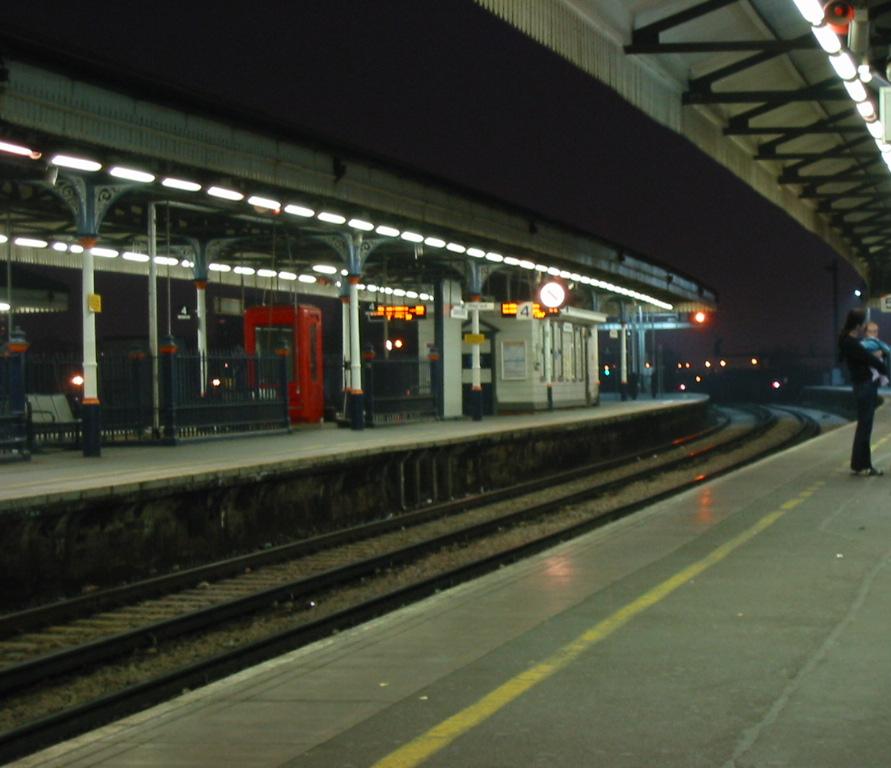
In the mood for a riotous lark, I decided to take a trip to Berlin with my friend Kristin. We travelled using a Deutsche Bahn special offer – the “Happy Weekend” ticket, which, according to the company, “offers all sorts of ways in which you can save money. Even at night, in your sleep.”

Ha, ha! Good one, Deutsche Bahn! The idea that night could have anything to do with sleep for a discount traveller on German rail is a merry jape indeed, and one which slyly draws attention away from the real purpose of “Happy Weekend”: namely, to thoroughly punish poor people for not having more money. The low-price journey from Switzerland to Berlin was scheduled to be a mere 26 hours, with 11 separate trains and one night spent in a railway station. However, because only a witless indigent would actually consider it possible to make almost a dozen razor-tight connections without a single train being delayed, our trip actually took some 37 hours, with 15 transfers and a bonus night spent lying awake on the garbage-strewn platform in Chemnitz (née Karl Marx Stadt), fantasizing about our savings and our upcoming 4:15am train departure.

I could go on about my disappointment that the Germans had dropped the ball on the one thing their kultur is supposed to have mastered: efficient trains that run on time. But I’ll leave that for someone else to pick up – God knows they already have enough to apologize for. Instead, I’d like to relate an incident that happened during our first train station bivouac, when our starry-eyed reverence for the “Happy Weekend” ticket was still whole and untarnished.

Kristin and I had just staked out some fairly comfortable benches in the Basel train station and were getting ready to go to bed (saving handfuls of cash all the while, don’t forget!), when we were approached by a woman and a small girl who seemed to be preparing to do the same thing. The mother immediately began speaking to us in rapid German. She and her daughter were from Poland, she explained, seemingly very eager to show off her command of her adopted language.

We were duly impressed, but only in the kind of abstract way that a tone deaf person might admire a symphony. For, with the exception of her statement of nationality, the guttural waves of German washed over Kristin and me without triggering any glimmer of understanding. When there were gaps in the monologue, we responded with various non-verbal signs of incomprehension until I finally remembered the German words for “I don’t know” and began chanting them repeatedly like a charm against evil.

This evidently made a very favourable impression on the mother, because the next thing we knew we were the acting guardians of her child while she scampered out the door into the Basel night. Keep in mind that, up to this point, the only things she knew about us were: A) that we were loitering around a train station after hours, and B) that we had failed to understand a word she said. Apparently this was all the proof she needed that we’d be great surrogate parents.

An awkward situation ensued. Should one of us stay awake until the mother got back (assuming that was her plan)? Should we try to find out where she went? Should we start putting money away now for summer camp and college? All this thinking about doing the right thing was tiring work, however, and pretty soon we had both fallen into carefree, money-saving sleep.

I woke up a few hours later, to the sound of the girl crying “Mama! Mama!” Mrs. Responsibility still hadn’t returned, and I was at a loss of how to fill the void. After a moment’s consideration, I settled on that tried-and-true parenting staple: glancing around the room uneasily while waiting for events to sort themselves out.

And, in perhaps the only stroke of luck we experienced in the whole wretched 37-hour odyssey, they did. Our linguistically-gifted friend came stumbling back into the train station, the screaming from the other bench stopped, and my night of passive child-rearing drew to an ignoble close.

* * * * * * * * * * * * * * * * * * * * * * * * * * * * * * *

“Parentage is a very important profession," George Bernard Shaw once stated, in words guaranteed to elevate enormously the status of any story that quotes them. “But no test of fitness for it is ever imposed in the interest of the children."

“Also, don’t ever believe a damn thing you hear from a German rail company,” he is reputed to have said, off the record, directly after. “The trains saunter in late like unfaithful husbands, the special offers are a cruel joke, and the station platforms make very poor beds indeed. The Germans have really dropped the ball on the one thing their kultur is supposed to have mastered.”

Sunday, August 13, 2006

A Word About France


July 21, 2006

France is, according to my guidebook, a land of contrasts and contradictions. No need to get excited about this just yet, because, as you may know, this is precisely what every guidebook says about every country. But France, I think, merits the cliché more than some of its more innocuous neighbours, if only because of the manifest contrast and contradiction between the draconian rules put in place to enforce cleanliness, and, notwithstanding, the unrelenting filth of the entire country.

I fist noticed this grim phenomenon two years ago, when I had just moved into student accommodation at the start of a student exchange in Grenoble. Now, this residence, to put it mildly, was not what you would call spanking clean. Tiles regularly disengaged themselves from the inside of shower stalls and colonies of mushrooms would swarm to take their place. Dirt and hair middens collected in the potholes in the linoleum floors of our rooms and could not be extracted without archaeological implements. As for the single kitchen sink, which I shared with 21 other people plus a shadowy population of illegal squatters, it was a rare and wonderful day when I could see to the bottom of it. The vast majority of the time the drain was plugged beyond all hope of deliverance, while an oily, chilli-coloured soup slowly congealed over top of it.

All this was well known to the residence staff, but despite numerous complaints and even some organized protests over the living conditions, they opted to follow in the proud tradition of their predecessors by doing absolutely nothing about them. “No need to curry favour with this batch of whiney students by upgrading to a post-medieval sanitation level,” I could imagine a grubby little bureaucrat preaching to his minions. “If last year’s experience is any guide, they’ll all be dead of cholera within days anyway.”

And yet to say that they were completely indifferent to matters of cleanliness would be an error, and a serious one. For – and this is where my guidebook scores points for perceptiveness – there was one hygienic rule that they held to so vigorously as to almost compensate for their laxity regarding all the others. Let the showers turn into tropical micro-ecosystems, if that was God’s will. But if any fool tried to do something so filthy as attach a toilet seat to any of the residence’s ostentatiously seatless thrones, it would be a matter not just for the building personnel, but for the long arm of the French law itself.

I know this because I was that fool, on my very first day in residence. I had already scandalized the concierge with a number of provocative questions that morning, including a saucy inquiry as to whether fridges were permitted in our rooms, or anywhere else in the building, for that matter (“Il n’y a aucune question!” was her shocked reply. “Les frigos sont beaucoup trop dangereux!”) But when I had the gall to suggest that I might buy a toilet seat or two and attach them myself, the already excited concierge reached a new pitch of indignation. She stared at me as though I had just stated my intention to spend my time in residence manufacturing plague bacilli (a process which, for that matter, was already carrying along splendidly in the building without anyone’s help). “It’s completely against the rules,” she sputtered after a struggle. And then she said – and I’m not making this up – that it was responsibility of the French ministry of health to ensure that no one in the university put anything on the toilets as vile as a seat.

For two years now I’ve been trying to imagine how this works. Does the ministry of health have some kind of hotline that people can call to bring agents to the scene of a toilet-related offence? “Officer, officer, I was peering out from among the foliage in my shower and I saw something unusual about the john! It might just be another cockroach colony, but I’m afraid someone might have added a s-s-s-seat!” Or is their role more in the realm of search and surveillance, like the narcotics division, checking up on public toilets with sniffer dogs and the like? Either way, they seem to be applying their efforts a bit inconsistently; many of the other parts of France that I’ve visited seem strangely to tolerate toilet seats like the rest of the developed world, sometimes even accepting them as fixtures. A sickening degree of leniency, yes, but that’s what you get with a nation of such free-wheeling contrasts and contradictions.

* * * * * * * * * * * * * * * * * * * * * * * * * * * * * * *

“But that was two years ago!” you might well protest, “and France is a land of spontaneous revolution. Could it not be that something has happened in that time – call it ‘modernization’ or what have you – that has turned the country into one of consistent and predictable cleanliness?”

Maybe this is the kind of question you pose to yourself often – God knows it is for me. If so, you were wise to begin reading this entry, because, having been back in France last week, I now have the definitive answer – and it may surprise you.

July 18, 2006 was a day of Saharan temperatures in Dauphiné, and the townspeople were keeping cool in the traditional way – surrounding themselves with great billowing clouds of cigarette smoke and sipping piping hot coffee. Being made of weaker stuff, Deborah and I decided to make our way past the overflowing cafés to the public swimming pool.

Now – and this must be distinctly understood – this was an outdoor swimming pool in France. Such a state of affairs demands the recognition of a few inescapable facts. In the first place, it means there was a flock of pigeons on permanent patrol over the pool, as indeed there is over every part of every French city, like so many feathered Luftwaffe bombers waiting to unload. Secondly, one must consider that all the pavement around was scattered generously with evidence of the passage of dogs. And finally, because this was a seedy neighbourhood in the southish part of the country, every toilet in the changerooms was of the elegantly minimalist “Third World Chic” variety – essentially a hole in the floor that does its job pretty much exactly as well as you would expect. The pool was, to put it bluntly, in a state of siege as far germs were concerned.

France’s filth, then, had stood the two-year test of time. But this was, of course, only half the battle – to maintain its position as a true ‘Nation of Contrasts and Contradictions,’ France would have to demonstrate once again a ludicrously inadequate and misguided effort to save face in the sanitation game.

I never really doubted that such an effort would be forthcoming. Indeed, as I tiptoed over the minefield of dog leavings on the pool deck, I knew with the certainty of a Greek tragedy that I would somehow be found too unclean to go into this unclean pool – the only question was what the reason would be. Unflossed teeth, perhaps? Smudged googles? A passport from a toilet-seat-tolerating country?

I needn’t have looked so far afield. When I got to the ticket window, the hairiest specimen of a man I had ever seen demanded to see the bathing suit I was carrying. When I duly presented my swimming shorts, he signalled to his security guard, and together the two of them informed me that I had to leave. Mind you, the problem wasn’t that my suit was dirty, threadbare, or even unfashionable – it was that it was comprised of too much fabric. Who would have guessed that the greatest health risk to French bathers comes not from the plague-ridden birds, the dog droppings, the Calcutta-fresh bathrooms, or the errant garbage – but rather from the few square inches of polyester that separate shorts from Speedo-style trunks. The latter, you see, are the only male swimming garment compatible with the pool’s rigorous level of germ-busting propre.

Defeated and baking hot, we stumbled back to my friend Kristin’s apartment for a cold drink. How grateful I was, in spite of everything, that she had taken the unimaginable risk of keeping a refrigerator in her house.