Tuesday, December 19, 2006

Small Nation


December 7, 2006

Living in Switzerland, I’ve encountered two main schools of thought regarding Canada. The first sees us as a kind of Cinderella to America’s wicked stepmother, under-appreciated but essentially perfect. This view is especially popular with people who have just finishing watching Bowling for Columbine, who make up a surprising proportion of the European population. “It’s so amazing that your country has no crime!” I’ve had the compliment paid to me on more than one occasion. “I guess because you’ve abolished poverty. You guys should try and teach those oil-crazed Yanks that they can’t solve all their problems with guns and stark racism.”

The second perspective, markedly less gratifying, is that we are basically the same as our southern neighbours – a bit more snow and mounties perhaps, but certainly close enough to allow the adjective “American” to fit comfortably over the lot of us. Deborah herself is a great proponent of this viewpoint, and delights in using the word to characterize all manner of things, from tacky Christmas decorations to private schools to obesity, whether they’re in any way specific to the United States or not. In her eyes, even knowing the lyrics to “O Canada” is an American trait, insofar as patriotism and jingoism are American qualities (no one in Switzerland can sing more than four or five words of their own baffling excuse for an anthem). Nor do any of the other trappings of Canadian culture do anything to qualify us for an independent identity. If Pierre Trudeau were trading for beaver pelts with Bob and Doug McKenzie in a packed hockey stadium on Empire Day, the whole event would still be American, if anyone in attendance were fat or had bleach-blond hair.

Still, you can’t really blame the Swiss such oversights: they have their own identity issues to resolve. Like the rest of the people of Germany, they’re still struggling to find their voice after the atrocious wars and genocides they inflicted on the world during the last century. And so, in the interests of helping them along in a spirit of brotherhood, I have prepared a small list of things that I have found to be uniquely, categorically Swiss. Please read on.

Swiss Essentials: An Ambiguous View of Large Carnivores


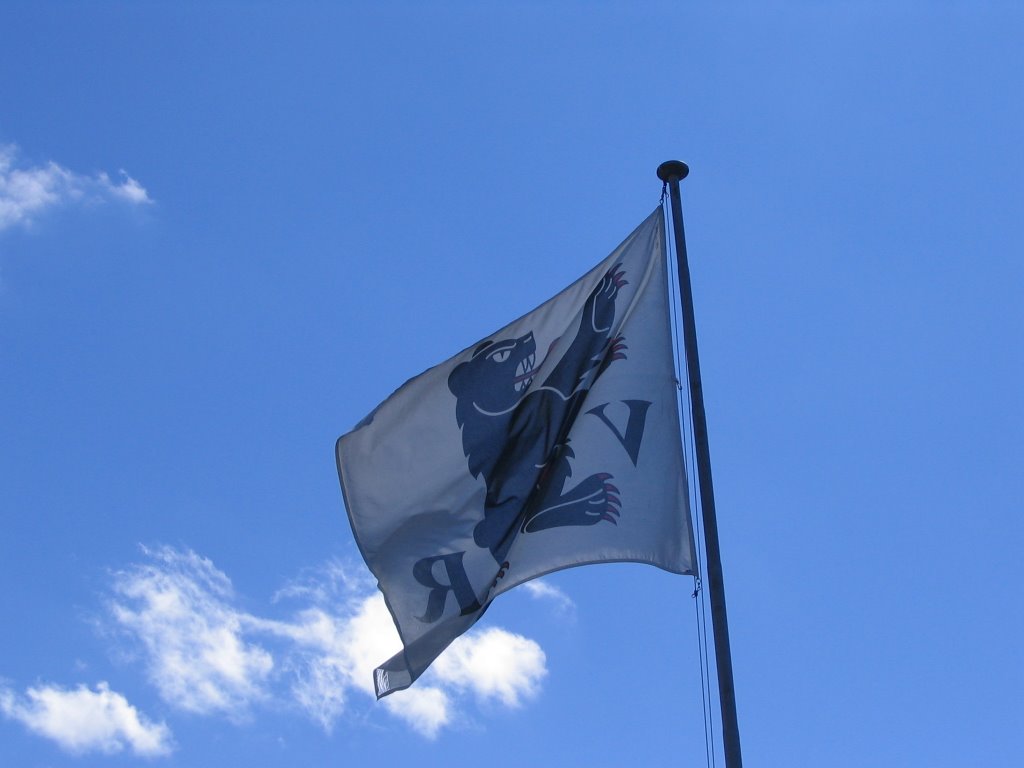
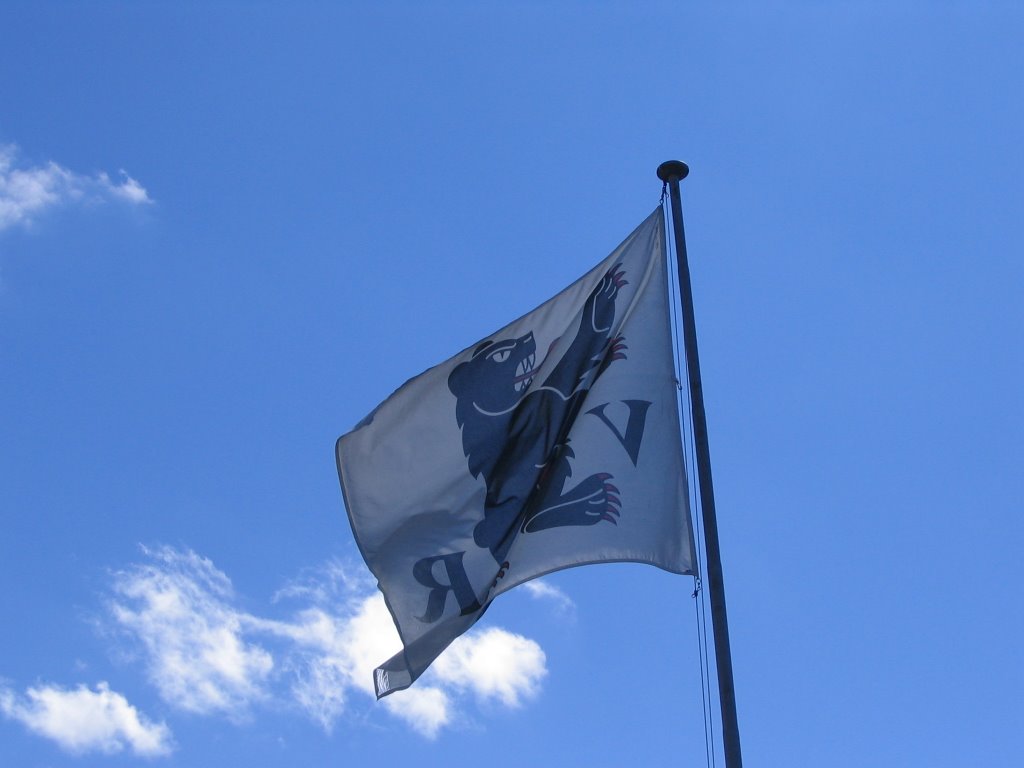
To go to Switzerland is to visit a country extremely conscious of bears. Pretty much any time the Swiss see an opening for a bear in a story or an emblem, they will stuff one in. Deborah’s birth-city of St. Gallen, for example, was supposedly founded after a bear brought a bundle of firewood to a wandering monk, who decided that was as good a reason as any to found a settlement on that very spot. But even this distinguished pedigree does not win St. Gallen the right to be called “city of the bear”, since that honour was already reserved for Bern, which rather cruelly keeps live bears in a pen downtown. Furthermore, three Swiss cantons (including Deborah’s) have bears on their coats of arms, and given that these appear on every licence plate and passport, as well as on flags distributed around the principal towns, it’s probably not an exaggeration to say that people in these cantons look at hundreds of images of bears every day.

And yet when an actual bear crossed over into Switzerland last year, the entire nation was in an uproar. Faced with the first wild specimen in the country in decades, Switzerland quickly formed a multi-national coalition with Austria and Germany to bring an end to the overwhelming security threat. As a team of seasoned bear trappers and Karelian elkhounds was hastily dispatched from Finland at several hundred thousand euros’ expense, divisions plagued the home front. Bavarian President Edmund Stoiber called the visitor Problembär, but reporters lovingly christened him Bruno, and covered newspaper front pages with stories of his frolicsome exploits. What could be done with him to appease both the grumbling farmers and the strident environmentalists? Finally, the Germans came up with a compromise they thought would please everybody: they would slaughter the bear, and everyone would go home. Some Swiss lamented this final solution, but many no doubt breathed a sigh of relief that they could once more enjoy their flags, license plates, statues, wall murals, and foundation myths in peace.

Incidentally, while all this was going on, I was in the Rocky Mountains with Deborah, who very courageously came hiking every day in spite of her overwhelming fear of our savage Canadian bears. But old Deborah wasn’t just going to walk into the jaws of death unprepared – no, she held the beasts back with a continuous litany of Swiss German children’s songs. “When the singing stops, we’re both dead!” I shrieked every now and then to keep her spirits up. We emerged each evening from the woods unscathed, and improved in our knowledge of kindergarten pop culture to boot. Why this solution never occurred to anyone in Switzerland, widely considered to be the Mecca of Swiss German children’s songs, is entirely beyond me.

Swiss Essentials: A Different Take on Magazine Promotions


It’s quite possible that you don’t spend a lot of time pondering magazine promotions, and I must say that I share that failing. However, I’ll wager that when you do take some time out of your busy day to give the subject a good think, your mind is mostly turned towards things that might actually influence your decision to buy a magazine. For instance, The New Yorker at one time gave chic, erudite anthologies of its cartoons to subscribers, while Maxim continues to cater to all our enter-to-win-a-once-in-a-lifetime-chance-for-a-Budweiser-Beach-Party-with-Jenna-Jameson needs.

And what is Switzerland’s answer to these gleaming golden treasures dangled before our adoring eyes? Well. A couple of months into Deborah’s subscription to Die Weltwoche, a sort of higher-brow Swiss Newsweek, a package arrived for her in the mail along with the latest issue. “Gott sei Dank! It has come!” shouted a jubilant Deborah, tearing the wrapping to shreds with Teutonic efficiency. And once the manifold layers of paper, cardboard, and plastic had been cleared away, there lay before her, bathed in glory, a single pair of sensible black socks. “A perfect fit!” crowed she, breaking into an impromptu jig, while I turned my attention to the accompanying letter in the hope of finding some clue as to her wildly disproportionate elation.

It began by congratulating loyal subscriber Frau Weber on her ownership of the new socks in the warmest terms. “And this is not the last pair of socks you’ll be receiving!” the letter went on magnanimously, deftly allaying my worst fears. Apparently, a new pair would be laboriously packaged and delivered every three months for the next year, the staff of the Die Weltwoche evidently considering that a one-time delivery of all the socks would simply be too much excitement for the average Swiss consumer to handle. And judging from my own limited sample, they may well have been right.